Croatia Unveils Anti-Inflation Package with Zero VAT on Solar Panels
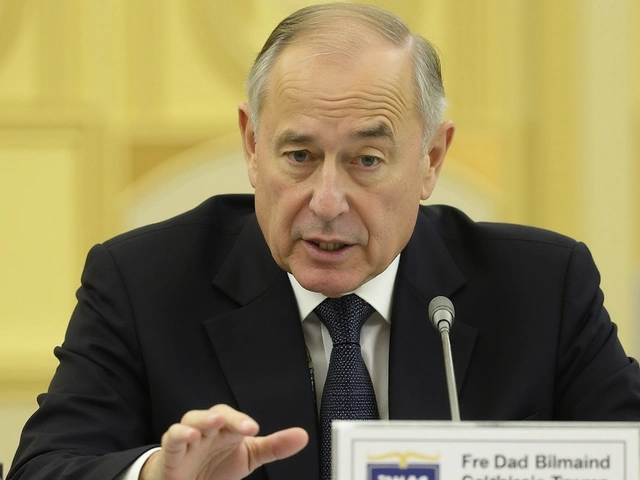
When Andrej Plenković, Prime Minister of Croatia, took to the podium last Thursday, he didn't just offer reassurance—he offered a roadmap. The Government of the Republic of Croatia is rolling out a new package of measures designed to tackle stubborn inflation and soaring energy costs. For households and businesses still feeling the pinch after years of economic turbulence, this isn't just political theater; it's a targeted intervention aimed at stabilizing prices and encouraging green investment.
The announcement comes from Zagreb, where policymakers are racing to keep up with shifting market dynamics. While inflation has cooled significantly from its peak, the recent uptick in consumer prices has reignited public anxiety. Plenković’s strategy focuses on two main pillars: immediate relief for businesses trapped in bad energy contracts and long-term incentives for renewable energy adoption.
A Strategic Shift to Green Energy Incentives
Here’s the thing that might surprise you: the government isn’t just throwing money at the problem. They’re changing the tax code to encourage self-sufficiency. Following internal discussions earlier that week, Plenković confirmed plans to slash the value-added tax (VAT) on solar panels to zero percent.
"We think that in the long-term we have to consider how to make a transition and ensure the electricity supply in the long run," Plenković stated, emphasizing the dual benefit of cost reduction and energy security. "All those wanting to invest in solar panels will be able to do so without VAT, that is, VAT on solar panels will be zero percent."
This move is significant. By removing the tax barrier, the government hopes to accelerate the adoption of solar technology among both private homeowners and commercial entities. It’s a classic carrot approach—make the upfront cost lower, and more people will jump on board. This aligns with broader European Union goals for green transition, but it also serves an immediate domestic purpose: reducing reliance on volatile fossil fuel markets.
Targeted Relief for Struggling Businesses
But wait, there’s more. The package isn’t solely focused on future investments. It also addresses current pain points for local enterprises. Plenković announced specific support for companies owned by local government units and private entrepreneurs who have been locked into unfavorable gas supply contracts.
These contracts, signed during periods of extreme price volatility, have become financial anchors for many small and medium-sized businesses. The government’s intervention aims to alleviate this burden, though exact financial figures remain undisclosed. The distinction is important: this isn’t a blanket subsidy for all industries. It’s a surgical strike aimed at those most vulnerable to contractual disadvantages in the energy sector.
The coordination behind these efforts involves several key players. Deputy Prime Minister Oleg Butković is leading the charge alongside the Ministry of Finance, the Ministry of Economy and Sustainable Development, and the Ministry of Labour, Pension System, Family and Social Policy. This multi-ministerial approach suggests a comprehensive review of how energy costs impact various sectors of the economy.
The Inflation Rollercoaster: Context Matters
To understand why this package matters now, you have to look at the numbers. According to an OECD analytical report, harmonised consumer price inflation (HCPI) in Croatia hit a staggering 13% in late 2022. That was the peak of the storm. By August 2024, it had dropped to a much more manageable 3%.
But then, oddly enough, things started to tick upward again. The BTI Transformation Index 2026 notes that while inflation began to decline in late 2024, citizens continued to perceive prices as high. This disconnect between statistical improvement and lived experience is common in post-crisis economies. People remember the high prices, even if the rate of increase slows down.
The Croatian government has already tried other tactics. Previous measures included direct controls on gasoline and basic goods prices. These interventions helped stabilize the situation temporarily, but they aren’t sustainable long-term solutions. Hence the shift toward structural changes like VAT cuts and contract assistance.
Part of a Broader Strategy
This latest announcement isn’t an isolated incident. Academic analyses indicate that the Croatian Government has responded to extreme inflationary pressures with a series of five distinct anti-inflationary packages over time. Each package has built upon the last, adjusting to new economic realities.
Interestingly, this current package does not include new taxes or explicit budget cuts. Nor does it detail specific pension relief measures, despite the involvement of the Ministry responsible for social policy. The focus remains tightly on energy and business competitiveness. This specificity suggests a calculated effort to avoid further straining public finances while addressing the root causes of price instability.
For investors and consumers alike, the message is clear: the government is betting on renewables and targeted support to weather the next phase of economic adjustment. Whether this will be enough to fully curb inflation remains to be seen, but it’s certainly a step in the right direction.
Frequently Asked Questions
What exactly is included in Croatia's new anti-inflation package?
The package primarily includes a reduction of VAT on solar panels to zero percent and targeted financial assistance for companies owned by local government units and entrepreneurs with unfavorable gas supply contracts. It does not currently include new taxes or broad pension adjustments.
Why is the government cutting VAT on solar panels?
The zero-percent VAT on solar panels is designed to encourage long-term energy independence and reduce reliance on volatile fossil fuel markets. By lowering the upfront cost of installation, the government aims to accelerate the transition to renewable energy sources, which also helps stabilize overall electricity prices.
Who is eligible for help with gas supply contracts?
Assistance is specifically targeted at companies owned by local government units and private entrepreneurs who have been negatively impacted by unfavorable gas supply contracts. The goal is to relieve the financial burden on these entities that were locked into high-price agreements during previous market spikes.
How has inflation in Croatia changed recently?
Inflation peaked at 13% in late 2022 before falling to 3% by August 2024. However, recent data indicates a renewed slight increase in prices. Despite this statistical cooling, many citizens continue to feel the pressure of high costs, prompting the government to introduce further measures.
Which government bodies are preparing these measures?
The package is being coordinated by Deputy Prime Minister Oleg Butković along with the Ministry of Finance, the Ministry of Economy and Sustainable Development, and the Ministry of Labour, Pension System, Family and Social Policy. This cross-ministerial collaboration ensures that economic, social, and labor impacts are considered.