
Mikel Challenges NFF Leadership as Super Eagles Rebuild After World Cup Failure
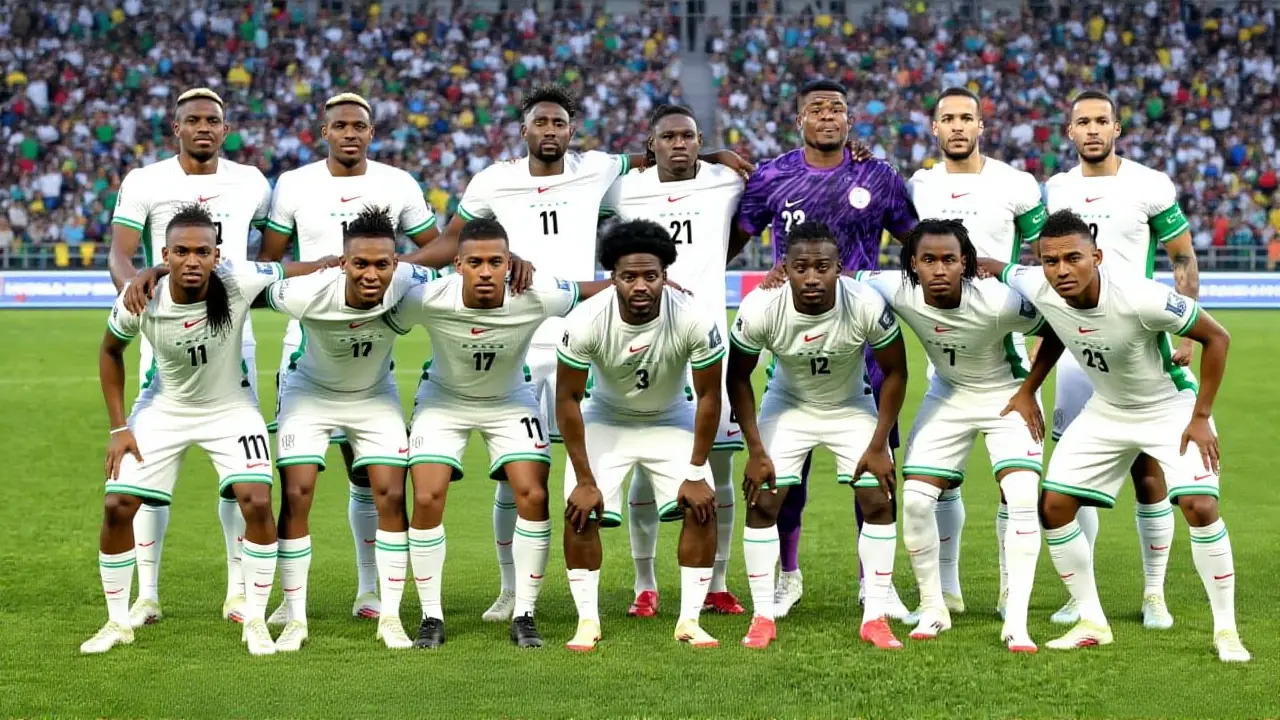
When John Obi Mikel walked off the pitch at Stamford Bridge for the last time as a Chelsea legend, few imagined he’d return to Nigerian football not as a player—but as a reformer. Now, three years after hanging up his boots, the 38-year-old former Super Eagles captain has thrown his hat into the ring to lead the Nigeria Football Federation (NFF), vowing to dismantle what he calls a ‘broken system’ after Nigeria’s shocking failure to qualify for the 2026 FIFA World CupNorth America. The loss to the Democratic Republic of Congo on penalties at the Stade des Martyrs in Kinshasa on November 19, 2024, wasn’t just a defeat—it was a reckoning.
Chelle’s High-Stakes Mandate
While fans demanded the head of Eric Chelle, the 58-year-old Franco-Malian coach appointed in August 2022, NFF President Ibrahim Musa Gusau doubled down. On December 18, 2025, Gusau told Eagle FM: ‘The mandate given to Eric Chelle is to get to the AFCON final.’ Not semifinals. Not top four. Final. That’s it. And if he doesn’t? No one’s saying—but the silence speaks louder than any contract clause.
Chelle’s track record is a paradox. He led Nigeria to a heartbreaking 2-1 final loss to Côte d’Ivoire at the Alassane Ouattara Stadium in Abidjan in February 2023. That run was hailed as a revival. But now, with World Cup dreams shattered, that same achievement feels like a cruel joke. The NFF is betting everything on the upcoming 2025 Africa Cup of NationsMorocco, where the tournament kicks off December 21, 2025.
The Squad That Sparked Outrage
On December 15, 2025, the 28-man squad dropped—and social media exploded. No Maduka Okoye, the dynamic 30-year-old goalkeeper who’s been a revelation for Darmstadt in Germany’s Bundesliga. No Victor Boniface, Bayer Leverkusen’s 24-year-old striker who scored 17 goals last season. No Tolu Arokodare, the pacey Genk forward who’s been on fire in Belgium. Their absence wasn’t explained. Not really.
In their place came veterans and relative unknowns. Wilfred Ndidi, 28, was named captain—ironic, given his injury-prone season at Leicester. Vice-captains? Moses Simon, Alex Iwobi, and Victor Osimhen. The latter, now at Galatasaray, carries the weight of a nation’s hopes. But the real shock? Call-ups like Ryan Alebiosu (Blackburn Rovers) and Igoh Ogbu (Slavia Prague)—players with fewer than 10 international caps combined. Chelle isn’t just rebuilding. He’s starting over.
Unpaid Wages and Public Denials
On December 17, 2025, the NFF confirmed it was processing ₦45 million in unpaid salary and bonuses for Chelle—three months’ worth. That’s not just negligence. That’s institutional dysfunction. Meanwhile, Gusau insisted on Eagle 102.5 FM: ‘I have never called a coach to say, “This player must be taken.”’ But the timing? Suspicious. The exclusions? Too precise. And the fact that three of Nigeria’s most dangerous attacking options were left out? Coincidence doesn’t explain it.
Former international Segun Odegbami, who interviewed Gusau, didn’t press further. But millions of fans did. Twitter trends. YouTube deep dives. Telegram groups dissecting every missed pass, every omitted name. The anger isn’t just about tactics—it’s about trust.
Mikel’s Challenge to the System
Enter John Obi Mikel. On December 17, 2025, MyNigeria.com reported he’s preparing a formal bid for NFF presidency. No campaign rallies yet. No flashy videos. Just a quiet, firm statement: ‘We’ve been lied to for too long.’
Mikel isn’t a politician. He’s a leader who knows what it means to carry the national jersey. He captained the Super Eagles from 2015 to 2019, through two World Cups and two AFCON campaigns. He’s seen the revolving doors of coaches, the backroom deals, the player selection politics. He knows the federation’s finances are a mess. And he knows the fans aren’t asking for miracles—they’re asking for honesty.
His candidacy isn’t just about replacing Gusau. It’s about dismantling the entire structure that allowed Nigeria to qualify for just one World Cup since 2014. The last time the Super Eagles reached the quarterfinals of the World Cup? 2018. Before that? 2014. And before that? 2002. That’s 23 years of stagnation. Meanwhile, Ghana, Senegal, and Morocco have surged ahead.
What’s Next: Training Camps and a Nation’s Hope
On December 22, 2025, the Super Eagles will begin training at the Mohammed VI Football Academy in Salé, Morocco. The NFF’s ‘NAIJA 4 THE WIN’ campaign is rolling out—billboards, hashtags, celebrity endorsements. But slogans won’t fix a broken system. Players need proper medical support. Academies need funding. Youth development needs structure. Right now, the federation is trying to win AFCON with a squad that looks more like a last-minute emergency patch than a national team.
Chelle’s success in Morocco could buy him another term. Or it could ignite the very revolution Mikel is preparing to lead.
What This Means for Nigerian Football
This isn’t just about one tournament. It’s about identity. Nigeria has the population, the talent, the passion. But without accountability, without transparency, without leadership that puts the game above politics—it’s all noise. The failure to qualify for the World Cup was a symptom. The exclusion of Boniface and Okoye? A sign of deeper rot. And Mikel’s move? A spark.
If Chelle reaches the AFCON final, the NFF will celebrate. But the real victory? If Mikel wins the presidency in the next election cycle, and starts cleaning house. That’s the only way Nigerian football comes back.
Frequently Asked Questions
Why is John Obi Mikel running for NFF president now?
Mikel’s decision comes after Nigeria’s failure to qualify for the 2026 World Cup and growing frustration over mismanagement, unpaid player wages, and controversial squad selections. As a former captain with deep institutional knowledge, he believes the NFF’s leadership must come from within the football community—not political appointments. His bid signals a demand for transparency and long-term planning.
Why were Okoye, Boniface, and Arokodare left out of the AFCON 2025 squad?
The NFF and coach Eric Chelle have not publicly stated reasons for their exclusion, sparking widespread speculation. Fans believe it’s due to personal bias, lack of communication, or interference from federation officials. All three players are in top form at European clubs, making their omission one of the most controversial decisions in recent Nigerian football history.
How much unpaid money does Eric Chelle reportedly have from the NFF?
The NFF confirmed on December 17, 2025, that it was processing ₦45 million (approximately $29,000 USD) in unpaid salary and performance bonuses for Chelle, covering three months. This delay raises serious questions about the federation’s financial management and its ability to support its own staff.
What are the chances of Nigeria winning AFCON 2025 with this squad?
While Nigeria has strong veterans like Osimhen and Ndidi, the lack of depth in attack and the absence of key players like Boniface and Okoye make them underdogs. Senegal, Ivory Coast, and host nation Morocco are favorites. Reaching the final—Chelle’s mandate—is already a tall order. Winning it would be a miracle without structural changes.
What’s the timeline for Mikel’s NFF presidency bid?
The NFF presidential election is scheduled for early 2026, likely in February or March. Mikel must file formal paperwork and secure nominations from at least five state associations. While he has strong public backing, he faces entrenched interests within the federation. His campaign will likely center on youth development, financial audits, and coach autonomy.
Has Nigeria ever had a former player as NFF president?
Yes—most notably, Shehu Dikko, a former national team captain, served as NFF president from 2010 to 2014. But his tenure ended amid controversy over contract disputes and World Cup failures. Mikel’s bid is different: he’s not seeking office to reward loyalty, but to reform the system from within—a first in modern Nigerian football.
Cheryl Jonah
December 20, 2025 AT 16:38Let me tell you something… the NFF didn’t just forget Boniface and Okoye-they were erased. This isn’t incompetence. This is a cover-up. Chelle’s got a backroom deal with someone. Maybe Gusau’s selling player slots to his cousin’s buddy in Lagos. Or maybe the CIA’s running the squad. Either way, the whole thing smells like a Nigerian soap opera written by a drunk bureaucrat. 🤔
ryan pereyra
December 22, 2025 AT 12:32It’s a classic case of institutional path dependency-Nigeria’s football governance apparatus is locked in a suboptimal equilibrium, wherein rent-seeking behavior by entrenched stakeholders suppresses meritocratic selection protocols. The exclusion of Boniface and Okoye isn’t tactical-it’s a manifestation of neopatrimonialism in sport administration. Mikel’s bid is a necessary rupture, but without structural institutional reform-think transparent bidding for coaching roles, independent audit commissions, and youth academy federalization-it’s merely symbolic.
Jane Roams Free
December 23, 2025 AT 17:04I’ve watched Nigerian football since the 90s. I’ve seen the chaos, the heartbreak, the brilliance. But this? This feels different. Mikel’s not here to play politics-he’s here to fix what was broken before any of us were born. And honestly? I’m rooting for him. Not because he’s famous. But because he’s the first person who actually seems to care about the game more than the spotlight.
Anthony Watkins
December 23, 2025 AT 23:16Why are we even talking about this? We got Osimhen. We got Ndidi. We got a squad. If you ain’t winning AFCON with that, you’re just weak. Stop crying about who’s left out. The real problem? You. You’re the reason Nigeria loses. You overthink everything. Just shut up and cheer. 🇳🇬🔥
Bryan Kam
December 25, 2025 AT 13:10Unpaid wages. No explanation. Same old.
Cheri Gray
December 25, 2025 AT 23:05ok so i just read this and im like… why is no one talking about how mad i am? like boniface is scoring goals like its a video game and they left him out?? and maduka? he’s literally the reason darmstadt didn’t get relegated?? this is not a team this is a typo
Andrea Hierman
December 27, 2025 AT 10:36It is, in fact, a deeply concerning development that a national sporting body would operate with such opacity and disregard for its athletes’ welfare. The systemic neglect of player compensation, coupled with the arbitrary exclusion of high-performing professionals, reflects not merely administrative failure, but a moral abdication. One cannot build excellence upon a foundation of neglect. Mikel’s candidacy, while late, is not merely timely-it is imperative.
Danny Johnson
December 28, 2025 AT 04:37Man, I just want to see these boys play. I don’t care if they’re from Lagos or London. If they can run, pass, and score-put ‘em on the pitch. This overthinking is killing the joy. Mikel’s got the heart. Let him lead. We’ll follow.
Christine Dick
December 29, 2025 AT 22:36How can anyone still defend this? This isn’t football. It’s a crime scene. Unpaid coaches? Omitting world-class talent? And you call this leadership? The NFF has betrayed every child who ever kicked a ball in a Lagos alley. Mikel isn’t running for president-he’s running for justice. And if you’re not behind him, you’re part of the problem.
Jullien Marie Plantinos
December 31, 2025 AT 11:24Oh wow, so now we’re pretending this is about football? It’s not. It’s about who gets paid off. Chelle’s been on the payroll for three years and still hasn’t won anything? And they’re still giving him a final? That’s not a mandate-that’s a bribe. And Mikel? He’s the only one with clean hands. Let him burn it all down.
Jason Davis
January 1, 2026 AT 02:33Look, I’ve seen this movie before. The guy who played the game? He knows the grind. The pressure. The backstabbing. The NFF thinks they’re running a business. But football? It’s blood, sweat, and sleepless nights. Mikel’s not here to be a politician-he’s here to be the guy who finally says ‘enough.’ And honestly? I’m tired of waiting for someone else to fix it.
Crystal Zárifa
January 1, 2026 AT 15:56It’s funny. The whole world’s watching Nigeria’s football chaos like it’s a reality show. But the real drama? It’s the quiet kids in Enugu who never got a proper pitch. The ones who never got scouted because the scouts only check Lagos. Mikel’s not just fighting for a squad. He’s fighting for the next generation. And honestly? That’s the only thing worth winning.
Serena May
January 3, 2026 AT 12:51Ok but why is no one talking about the fact that Chelle’s contract says ‘final’? That’s not a goal. That’s a death sentence. And they’re still paying him? 😭
James Otundo
January 3, 2026 AT 21:46Let’s be real-this whole thing is a distraction. Nigeria’s football problems are deeper than Mikel or Chelle. It’s the schools. It’s the infrastructure. It’s the fact that kids in Kano don’t even have boots. Stop romanticizing ex-players. We need a revolution, not a celebrity.
Sarah Day
January 5, 2026 AT 11:24Just wanted to say I’m so proud of Mikel for stepping up. I’m not even Nigerian, but I’ve followed the team since I was a kid. This is the kind of courage we need more of.
Basabendu Barman
January 5, 2026 AT 18:01Wait… you think Mikel’s the solution? Bro, he played for Chelsea. He’s got a British accent now. He doesn’t even know what ‘Naija’ means anymore. This is a Western plot to control Nigerian football. I saw it on a Telegram channel. The NFF is clean. The real traitor is the guy who leaked the salary info. He works for the IMF.
Krishnendu Nath
January 7, 2026 AT 10:08mikel u da man!! we need you!! no more politics!! just football!! i been kickin ball since i was 5 in kaduna!! no one ever saw me!! but now… i believe!! go mikel go!! 🇳🇬💪