
Canada Holds 13th‑Ranked Colombia to Scoreless Friendly at Red Bull Arena
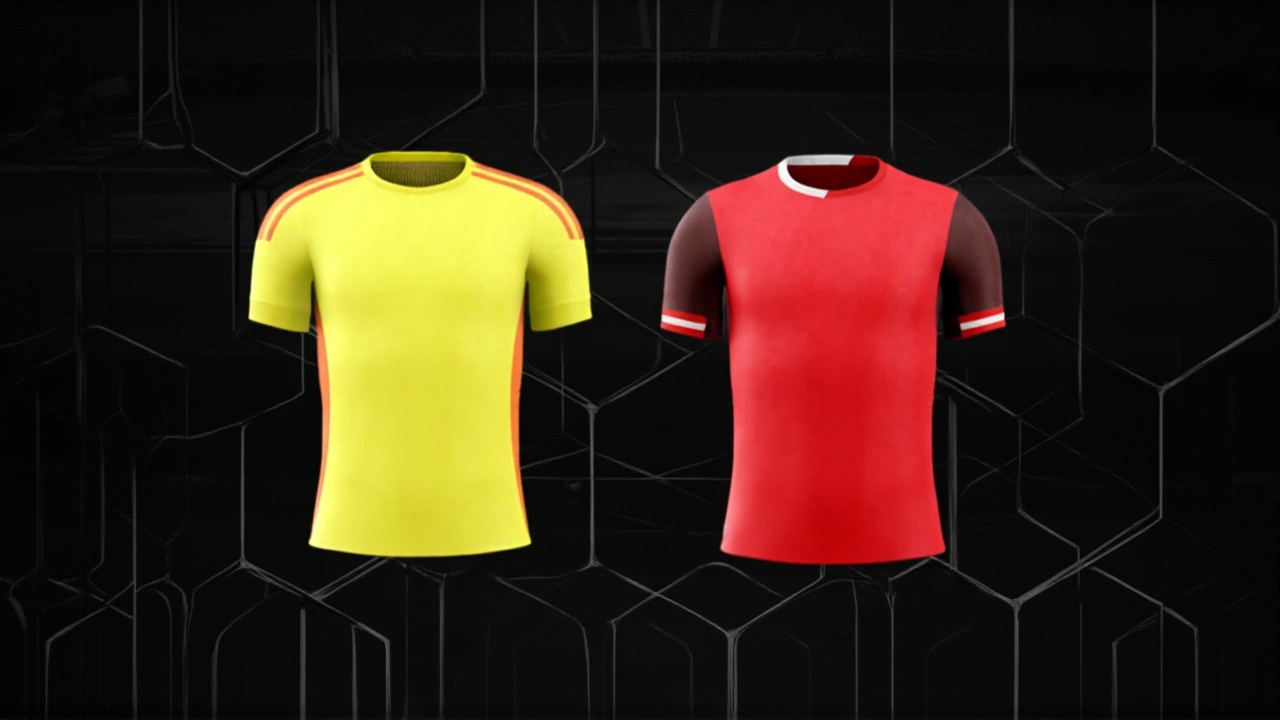
When Canadian men's national soccer team met the Colombian national team on at Red Bull Arena in Harrison, New Jersey, the result was a surprise 0‑0 draw. Coach Jesse Marsch praised the squad’s defensive shape but warned that the side still needs sharper finishing in the crucial moments that define wins.
Historical Face‑off
Canada and Colombia have crossed swords three times before. The most memorable meeting came in the 2000 CONCACAF Gold Cup final, where Canada struck a 2‑0 victory on home soil. A decade later, Colombia edged a 1‑0 friendly in the same New Jersey venue, and back in 1988 the South Americans won 3‑0 in Armenia, Colombia. Those past fixtures set the stage for a clash that felt more about testing tactics than chasing points.
Match Summary and Key Moments
From the first whistle, the Canadians pushed high, hoping to avenge a 1‑0 loss to Australia just three days earlier in Montreal’s Stade Saputo. The opening half saw Tajon Buchanan unleash a long‑range effort in the 28th minute that forced Colombian keeper Álvaro Montero into a diving save.
Colombia answered with wing‑play, most notably when winger Luis Diaz cut inside and let loose a curler at the 57th minute. The ball skimmed the far post, leaving the Colombian striker fuming. “I could've given us the lead,” he muttered in the post‑match interview, the frustration evident.
Canada’s most promising chance arrived in the 76th minute. Jonathan David slotted the ball into the net, only for the referee to whistle for off‑side on Jacob Shaffelburg. The decision held, and the goal was erased.
Late drama unfolded when substitute Rafael Santos Borré rose for a header in the 88th minute, edging just wide. In added time, defender Richie Laryea made a sliding tackle that forced a Colombian striker to smash the post, while goalkeeper Dayne St. Clair may have brushed the ball before it rattled the wood.
Coaches’ Perspectives
After the final whistle, Jesse Marsch summed up the night: “I’m happy with the progress. We need a little more quality in important moments.” He highlighted the team’s compact shape and the willingness of younger players like Tani Oluwaseyi to take on the ball, even if the final product was lacking.
Colombia’s coach, Reinier Puig, praised his side’s attacking intent but admitted the missed chances were “painful at this stage of preparation.”
Implications for Upcoming Fixtures
The draw leaves Canada with two matches in the October 2025 international window, both ending without a goal. While the defensive solidity is encouraging, the lack of firepower raises questions ahead of the CONCACAF Nations League matches in November. Analysts at Sportsnet note that Canada’s shot‑on‑target count sits at one for the entire window, a statistic that will need to improve if the team hopes to qualify for the 2026 World Cup automatically.
For Colombia, the match serves as a confidence‑building exercise ahead of their Copa América qualifiers. Their attacking trio – Luis Diaz, Rafael Santos Borré and midfielder Richard Rios – will likely receive more minutes as the federation fine‑tunes the squad.
Statistical Snapshot
- Possession: Canada 48% – Colombia 52%
- Shots (total): Canada 8 – Colombia 12
- Shots on target: Canada 1 – Colombia 4
- Fouls: Canada 14 – Colombia 11
- Corner kicks: Canada 3 – Colombia 5
While the numbers favor Colombia in most categories, the margin is slim enough that a single moment could have swung the result.
Key Facts
- Date: October 14, 2025
- Venue: Red Bull Arena, Harrison, NJ
- Result: 0‑0 draw (Canada vs Colombia)
- Coach Canada: Jesse Marsch
- Coach Colombia: Reinier Puig
Frequently Asked Questions
How does the draw affect Canada’s World Cup qualification hopes?
The result leaves Canada with zero points from two matches, putting pressure on upcoming Nations League fixtures. A win in the next window could keep Canada within the automatic qualification zone, but they’ll likely need a stronger offensive output to secure the needed points.
Which Canadian players stood out despite the lack of goals?
Defender Richie Laryea made a crucial late tackle that prevented a Colombian equaliser. Goalkeeper Dayne St. Clair looked sharp, and midfielder Tajon Buchanan kept the pressure alive with his long‑range effort.
What tactical changes did Coach Marsch mention after the game?
Marsch highlighted the need for quicker transitions and more decisive finishing in the final third. He also praised the defensive shape but indicated that the team will work on creating clearer shooting lanes for attackers like Jonathan David.
Why was the match significant for Colombia?
Colombia used the friendly to test wing options and integrate younger talent ahead of the Copa América qualifiers. Even without a goal, the side showed why they are ranked 13th, especially in possession and attacking intent.
When and where can fans watch highlights of the match?
Full‑length highlights are available on the OneSoccer YouTube channel, uploaded on October 15, 2025. Short clips were also shared on the Fanatiz channel the same day.


Scarlett Mirage
October 15, 2025 AT 22:08One must first acknowledge the historical symmetry between Canada and Colombia, for their encounters have often served as a litmus test for tactical evolution, rather than mere exhibition; the 0‑0 stalemate at Red Bull Arena is a continuation of this pattern, emblematic of defensive discipline juxtaposed with clinical insufficiency. Moreover, the philosophical underpinnings of a “defensive shape” merit scrutiny: is a team merely preserving a structure, or is it expressing a deeper ethic of collective responsibility? From a moral standpoint, the Canadian side’s refusal to concede reflects commendable restraint, yet the lack of finishing betrays a certain ethical neglect of the attacking craft. Thus, the match should be interpreted not as a failure, but as a didactic moment, urging introspection on the very nature of competitive ambition.
Ian Sepp
October 25, 2025 AT 00:08I appreciate the comprehensive overview provided; the statistical breakdown offers valuable context for evaluating the teams' performances, and the inclusion of coaching perspectives further enriches the analysis. It is evident that Canada’s defensive organization was effective, while the offensive output remains an area for development. The article’s structure facilitates a clear understanding of the match’s implications for upcoming fixtures.
Dennis Lohmann
November 3, 2025 AT 01:08Great recap! 😊 The defensive solidity you highlighted shows that Canada can hold its own against higher‑ranked opposition, and the mention of younger talent like Tani Oluwaseyi is encouraging. For anyone looking to improve, focusing on sharp transitions and finishing drills could turn those close chances into goals. Keep up the good work, and let’s hope the next Nations League match brings the firepower we all want to see. 🙌
Jensen Santillan
November 12, 2025 AT 03:08It is almost tragicomic how the North American contingent continues to masquerade its mediocrity behind a veneer of “solid defending.” The Canadians, undoubtedly, executed a textbook low‑block, yet the lack of a decisive third‑quarter illustrates a systemic inability to synthesize possession into penetration. One could argue that the tactical blueprint resembles a conservative ballet, graceful yet impotent when the spotlight demands aggression. Moreover, the Colombian wing play exposed the Canadians’ flanking frailties, a flaw that will be ruthlessly exploited unless Marsch orchestrates a paradigm shift. The off‑side controversy surrounding Shaffelburg’s disallowed goal further underscores the thin line between opportunism and naïveté. In essence, the match was a showcase of potential shackled by an overarching deficiency in creative risk‑taking.
Mike Laidman
November 21, 2025 AT 05:08Overall a dull game with few chances.
Brandon Rosso
November 30, 2025 AT 07:08Despite the goalless result, there are promising signs to celebrate; the disciplined shape and the willingness of players like Jonathan David to push forward indicate a foundation that, with a bit more sharpening on the final ball, could translate into victories. Let’s keep the momentum, focus on finishing drills, and trust that the upcoming fixtures will showcase the true potential of this squad.
Tracee Dunblazier
December 9, 2025 AT 09:08Honestly, watching Canada sit on the ball was a bit of a snoozefest, but at least the defense held up. I guess the coaches will sort out the offense soon enough.
Edward Garza
December 18, 2025 AT 11:08The match exposed Canada’s lack of cutting edge; they were comfortable defending but offered nothing in attack.
Allen Rodi
December 27, 2025 AT 13:08Hey folks, just wanted to point out that Canada’s shot‑on‑target count being only one isn’t just a stat-it reflects a need for better chance creation. Working on quick combinations up front could free up more space for David and Buchanan to get shots on goal. Also, keeping the defensive shape while encouraging midfielders to take more progressive passes might be the key.
Jody Webster
January 5, 2026 AT 15:08Well… I suppose some might say the draw was “expected,”; however, I’d argue the whole narrative of “Canada improving” is overhyped-did you notice how many passes were just… uh… lost in the air? tHe reuslt is that we’re all just being fed a story.
Steve Goodger
January 14, 2026 AT 17:08First and foremost, I want to thank everyone who contributed to the discussion, as the collective insight truly elevates our understanding of the game. When evaluating the 0‑0 result, it's important to consider not only the raw statistics but also the contextual factors surrounding each team's preparation. Canada entered the match after a taxing trip to Montreal, where they suffered a narrow loss to Australia, which may have influenced their tactical conservatism. Colombia, on the other hand, used the fixture as an opportunity to experiment with wing options, a decision that can be seen in Luis Diaz's incisive runs. The defensive organization displayed by Canada-particularly the compact midfield line-was a clear indicator that coach Jesse Marsch emphasized structural integrity. Nevertheless, the scarcity of clear-cut chances highlights a lingering issue with the final third, something that has been noted in previous analyses as well. One practical suggestion for the Canadians is to incorporate more overlapping runs from full‑backs, thereby creating additional lanes for the forwards to exploit. Additionally, increasing the tempo during transition phases could help catch the Colombian defense off balance. From a coaching perspective, the decision to keep the same back four throughout the match provided stability but may have limited flexibility. A strategic rotation, perhaps injecting a fresh midfielder in the second half, might have sparked the creativity that was lacking. In terms of individual performances, Richie Laryea's late tackle was a textbook example of timing and positioning, deserving recognition. Dayne St. Clair also demonstrated composure under pressure, making several crucial saves that kept the scoreline level. Looking ahead to the Nations League, Canada must translate these defensive strengths into a more balanced approach that includes consistent goal‑scoring opportunities. The coaching staff could benefit from reviewing video footage of the missed chances to identify patterns that impede execution. Furthermore, encouraging younger players like Tani Oluwaseyi to take on more responsibility could inject the energy needed for breakthrough moments. In summary, while the draw may not excite those looking for fireworks, it offers a solid platform upon which Canada can build a more dynamic and resilient side.
johnson ndiritu
January 23, 2026 AT 19:08Honestly, this performance is a disgrace 😒-Canada pretends to be a contender while failing to convert the few chances they create. The moral of the story? If you can't finish, you shouldn't be on the pitch. ⚽️🚫 The coaching staff needs to stop making excuses and start holding players accountable. 🙄
sheri macbeth
February 1, 2026 AT 21:08Oh sure, the 0‑0 draw was just “defensive excellence,” as if someone didn’t plant the idea that a goalless game would keep the betting odds favorable. 🙃 Maybe the referee’s whistle was on a hidden timer, or the ball was subtly magnetized. Either way, enjoy the drama, folks-nothing’s ever as simple as it seems! 😉